Why the water inside your heat network matters as much as the pipework itself
As the UK accelerates the rollout of low-carbon heat networks, the importance of proper water treatment and ongoing monitoring cannot be overstated. The quality of water circulating through a heat network has a profound impact on the system’s efficiency, reliability, and longevity.
In a sector striving for decarbonisation, such hidden inefficiencies translate directly into higher carbon emissions, rising operational costs, and reduced consumer confidence. Whether the network uses traditional steel pipework or more modern polymer-based pre-insulated systems, water chemistry remains a critical factor in delivering consistent and efficient performance over the system’s lifetime.

Polymer piping reduces risk – but not the need for treatment
Modern pre-insulated polymer service pipes – such as CPV’s Hiline Clover, eFlex, and FibreFlex systems – offer many advantages over traditional bonded steel systems. Chief among these is the removal of corrosion risk from the service pipe itself, along with reduced scaling and smoother internal surfaces that minimise frictional losses. These advances deliver lower pumping energy and extend system life.
Even with corrosion-resistant polymer pipework, water quality remains a critical vulnerability for the wider network infrastructure. Components such as heat exchangers, valves, pumps, and steel interfaces at energy centres and building connections can all suffer from corrosion, scaling, or microbiological fouling if water treatment is neglected.
The result? Reduced heat transfer efficiency, blockages, rising pump energy use, and even catastrophic component failures. So, while polymer-based systems significantly reduce the risk envelope, they do not eliminate the need for effective water treatment.
The consequences of corrosion and poor water quality
Corrosion within a heat network triggers a chain reaction of inefficiencies and reliability issues. As internal metal surfaces degrade, iron oxides and particulates are released into the circulating fluid, creating a build-up of sludge, narrowing pipework diameters and coating heat exchangers.
That build-up causes:
- Higher pressure losses and pumping energy
- Impaired heat transfer at consumer interfaces
- Inconsistent delivery temperatures and customer complaints
- Premature failure of sensitive components such as plate heat exchangers
The numbers tell a stark story, backed up by industry heat exchanger and boiler studies. A thin layer of corrosion or scaling – just one millimetre thick – can reduce heat transfer efficiency by up to 10 per cent. This happens because scale has a thermal conductivity many times lower than steel, acting as an insulating barrier that forces pumps and heat sources to work harder. In severe cases, poor water quality can lead to efficiency reductions up to 25 per cent. Ultimately, this degradation affects consumer outcomes, leading to less consistent heating, lower reliability, and higher running costs for network operators.
Establishing a robust water treatment regime
To combat these issues, every heat network must be commissioned with a robust water treatment strategy. This typically includes:
- Filtration and flushing during commissioning to remove installation debris and suspended solids.
- Chemical dosing, often with corrosion inhibitors and oxygen scavengers, to protect metallic components and prevent oxidation.
- Biocide treatments where microbiological activity poses a risk, especially in low-temperature or intermittent operation systems.
- Regular water sampling and analysis to ensure that pH, conductivity, and dissolved oxygen remain within defined tolerances.
- Automated dosing and continuous monitoring during operation to maintain stable water chemistry over time.
These approaches not only prevent system degradation but also align with the latest best practice guidance for the UK’s heat network sector.
Standards and compliance – CP1 and HNTAS
Industry standards play a vital role in ensuring consistent quality and performance across heat networks. The CIBSE/ADE CP1 (2020) Heat Networks Code of Practice sets out clear guidance on the design, commissioning, and operation of heat networks, including Annex E’s recommended water quality. CP1 identifies poor or untreated water as one of the main causes of network under-performance and failure.
Building upon CP1, the UK Government’s Heat Network Technical Assurance Scheme (HNTAS) – to be administered by Ofgem under powers in the Energy Act 2023 – will introduce mandatory technical standards and verification processes.
Under HNTAS, heat network developers and operators will need to demonstrate compliance with defined performance metrics, including evidence of proactive maintenance and water quality management. These requirements will help drive up system reliability and consumer confidence across the UK’s growing portfolio of heat networks.
Reviving legacy networks: recovery through water treatment
Many legacy heat networks – installed a decade or more ago – suffer from neglected treatment regimes. Over time, sludge accumulation and scaling lead to deterioration in efficiency and increased operational issues.
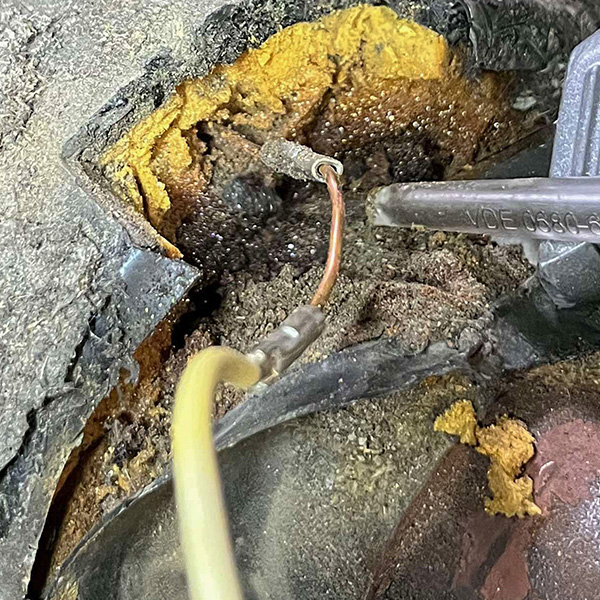
Fortunately, these systems can often be recovered by re-establishing proper water treatment, including chemical cleaning, re-dosing and implementation of a continuous monitoring regime.
By reinstating effective water management, operators can restore system performance, reduce maintenance demands and extend the remaining service life of valuable infrastructure. When combined with regular leak detection and insulation condition monitoring, this approach becomes a powerful preventative strategy.
Beyond water chemistry: integrating leak detection and network health
An effective maintenance strategy doesn’t stop with water chemistry – it must be paired with the physical integrity of the buried pre-insulated network itself. Even minor undetected leaks can allow oxygen ingress and freshwater make-up. Both issues accelerate corrosion in connected metallic components and disrupt water chemistry stability.
Here, CPV combines its Hiline pre-insulated systems with RATMON’s advanced leak-surveillance and analysis services, delivering significant added value. By combining intelligent leak surveillance with continuous system monitoring, operators gain real-time insights into both pipe condition and water quality. This integrated approach allows early intervention – before minor issues escalate into major system failures – helping maintain peak performance and compliance with industry standards.
How CPV supports network reliability and compliance
As a UK-based manufacturer and technical partner, CPV’s Hiline technical team offers engineering support to network developers, designers and operators.
Our Hiline range of steel, polymer, and hybrid systems, combined with RATMON’s intelligent monitoring solutions, enables network developers and operators to:
- Design for compliance with CP1 and HNTAS.
- Shorten and simplify installation and commissioning.
- Detect leaks and condition changes before failures occur.
- Maintain efficiency, extend system life, and support decarbonisation targets.
In a sector increasingly defined by regulation, decarbonisation goals, and consumer expectations, water treatment and ongoing monitoring are no longer optional – they are essential for achieving high-performing, low-carbon, and resilient heat networks. By combining robust treatment routines with intelligent monitoring, network operators can safeguard performance, protect investment, and play a measurable part in the UK’s journey to net zero.