Heat networks are becoming an essential part of the UK’s low-carbon future. Whether you’re working on a small communal scheme or a city-scale district heating network, the one place you don’t want surprises is with your buried pipe system. Most long-term performance issues start underground: heat loss, water ingress, joint failures, leaks that take days (and roads) to find. So how do you choose a bonded pre‑insulated pipe system that will still be reliable and efficient in 30–50 years?
Here’s a practical checklist.
Start with your Requirements
Your needs will drive all the other options available.
- Operating and peak temperatures
- Design pressure
- Diameter range and total route length
- Trench constraints and site obstacles
- Ground conditions (including groundwater level)
- How the network will be monitored and maintained
Understanding Pipe Basics

A modern bonded pre-insulated pipe system typically has three key elements:
1. Service pipe – the inner pipe that carries hot water
2. Insulation layer – usually polyurethane (PU) foam, bonded to the pipe
3. Outer casing –typically polyethylene (PE) to protect the insulation and keep water out
In bonded pipe systems, these are manufactured as a single composite unit. That bonded construction is what helps maintain structural integrity and thermal performance over time.
Steel bonded systems for buried hot water networks, such as Hiline Steel, are governed by standards such as BS EN 253 (with associated standards for fittings, joints and alarm systems).
Like Your Mobile Phone Network – Heat Networks Have Different Generations
You’ll often hear people describe schemes as 2nd, 3rd or 4th generation. It’s basically shorthand for how hot the network runs (and, increasingly, how it’s designed to integrate low‑carbon heat).
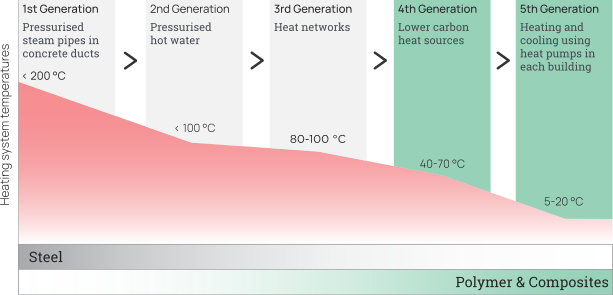
1st generation – Steam networks
Steam as the heat carrier. High temperatures, higher losses, and more challenging infrastructure.
2nd generation – High-temperature hot water
Pressurised water, typically above 100°C. Tighter demands on materials, joints and safety and still high distribution losses.
3rd generation – “Conventional” hot water district heating
Lower temperature than 2nd gen — typically 100°C down to 70°C.
4th generation – Low-temperature heat network
Designed for 50–70°C flows, with cooler returns. Lower temperatures reduce heat losses and make it easier to integrate low‑carbon sources like large heat pumps, solar thermal and waste heat.
5th generation / ambient loops / thermal source networks
Operating at, or near, ambient temperatures ~10–30°C. Decentralised heat pumps at buildings are used to lift temperatures for heating.
What to Ask Your Suppliers
1. What service pipe material is right for the project?
Different materials suit different applications:
- Rigid Steel Systems
- Pros: High strength, suitable for higher temperatures and pressures, long lifespan
- Cons: Slower installation, requires highly skilled welding, corrosion risk is a consideration
- Flexible polymer pipes (e.g. PEX)
- Pros: Fast installation, supplied in coils, fewer joints
- Cons: Lower temperature and pressure limits, typically suited to smaller networks, branches and connections
For larger or higher-temperature networks – especially third and fourth generation systems – steel remains the benchmark. Projects often become hybrid approaches (combining steel and flexible pipes) to offer efficiency and cost benefits.
 2. How does insulation performance affect cost?
Heat loss directly impacts operating costs. Better insulation means less wasted energy.
Polyurethane foam insulation comes in different thicknesses, commonly referred to as:
- Series 1 - standard thickness
- Series 2 - increased thickness – reducing heat loss by around 25-30 per-cent (*)
- Series 3 - further increased thickness – reducing heat loss by 10-20 per-cent (*)
As shown, upgrading insulation thickness can significantly reduce heat losses(*) depending on pipe size and operating conditions. Over the lifetime of a network, this can translate into significant energy and cost savings – often outweighing the slightly higher upfront material cost.
(*) Note, these reduction figures are illustrative and subject to a variety of factors in real-life scenarios)
Tip: don’t just compare “price per metre” or capital cost. Ask:
“What are the expected lifetime heat losses for my operating conditions?”
3. Outer casing and long-term insulation performance?
The outer casing plays a crucial role in protecting the insulation and preventing water ingress. The details matter:
- How robust is the casing for handling and burial?
- How reliable is the casing jointing method?
- What’s the track record of the joint kits and installation process?
Systems may also offer diffusion barriers – layers designed to prevent oxygen and moisture entering the insulation foam. Moisture ingress accelerates foam ageing, reducing insulation performance over time.
While not all systems include diffusion barriers, evidence suggests that improved casing performance can help maintain thermal efficiency over decades. For long-life infrastructure, this is an important consideration.
 4. Is there an effective leak detection system?
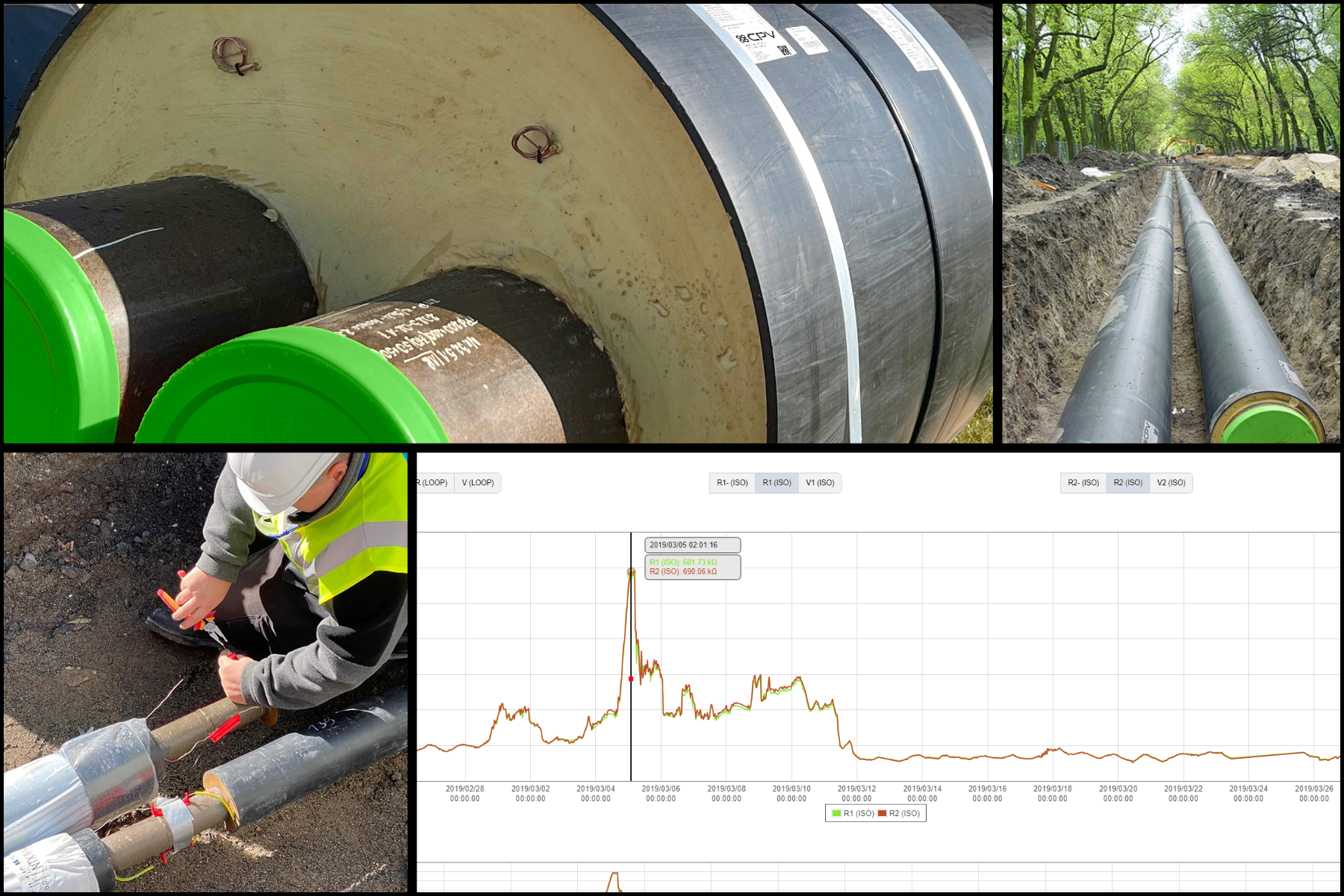
Modern pre-insulated pipe systems can include electronic surveillance (alarm) systems embedded within the insulation.
These systems detect moisture ingress early, allowing operators to locate and repair issues before they become major failures. They can significantly extend asset life and reduce operational risk.
However, installation is only part of the story. Here’s the procurement question that is often missed: Who is responsible for monitoring, and what happens when an alarm triggers?
A robust approach has to include:
- Proper commissioning of the alarm system
- Ongoing round-the-clock monitoring and cloud-based alerts
- Long-term maintenance contracts
Installation Matters as Much as Design
Even the best pipe system can fail if installed poorly. Key installation considerations include:
- Groundworks
Proper trench preparation, bedding and backfilling are essential to avoid stress on pipes and joints.
- Jointing quality
Service pipe welds and casing joints must be secure and correctly installed. Poor joints are a common failure point and as such, they should be an important consideration.
- Thermal expansion
Heat network pipes expand and contract as temperatures change. Routes must be designed to accommodate this safely, using expansion loops or other techniques.
In short: quality installation is non-negotiable. Ensuring adequate personnel training for installation techniques and jointing methods is a way to improve installation quality.
Standards and Compliance
A good system should comply with recognised European standards, as referenced in CIBSE CP1 (2020). Key standards include:
- BS EN 253 – Pre-insulated bonded pipe systems (steel service pipes)
- BS EN 448 / 488 / 489 – Fittings, valves and jointing systems
- BS EN 14419 – Alarm systems
- BS EN 15632 – Flexible pre-insulated polymer pipe systems (e.g. PEX)
These standards ensure compatibility, durability and performance across the entire network.
The UK is also moving toward developing formal technical standards and assurance through the Heat Network Technical Assurance Scheme (HNTAS). These will play a central role in ensuring quality design, installation and operation across the sector.
Designing Modern Heat Networks
Fourth generation heat networks (4GDH) operate at lower temperatures to improve efficiency and integrate renewable heat sources.
High-performance pre-insulated pipe systems are well suited to these networks, particularly when designed with:
- Optimised insulation thickness
- Low heat loss
- Robust leak detection
- Flexible system layouts
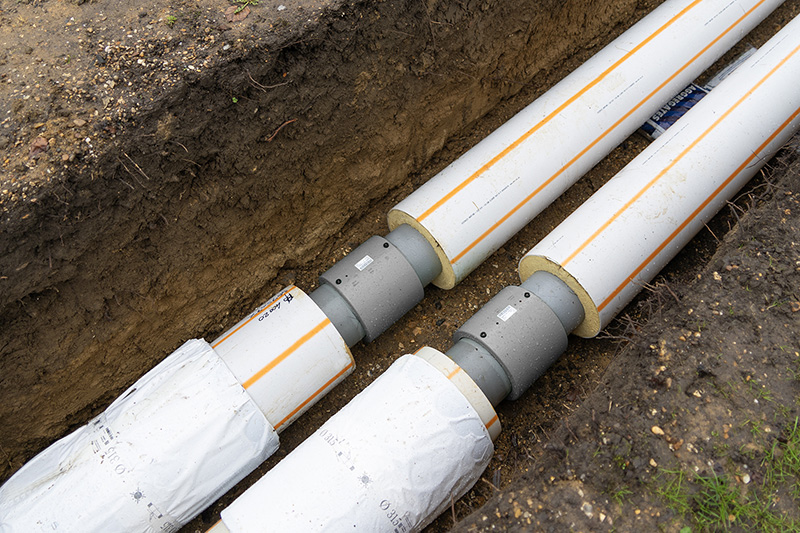
A growing trend is the use of hybrid networks, combining rigid steel pipes for main distribution with flexible and rigid polymer pipes for connections. This “best of both worlds” approach can balance performance, cost and installation speed.
 What Does “Good” Look Like?
In summary, a well-specified buried pre-insulated pipe system typically means:
- Proven compliance with relevant EN standards
- Appropriate service pipe selection for temperature, pressure and scale
- High-performance insulation, with consideration of lifetime heat loss, not just capex
- Durable casing with protection against moisture ingress
- Leak detection specified with a real plan for monitoring/response
- Installation carried out with the right training and attention to ground conditions and expansion
- Flexibility to support hybrid network designs
Ultimately, good design is about thinking long-term – balancing capital cost with operational performance and reliability over decades.
Bookmark this Article for Later
If you’re working on a heat network this year, bookmark this article — it’ll make your next specification review much easier. With over seventy years of experience designing, developing and manufacturing pre-insulated pipe systems, CPV has supported heat networks of all sizes – from local communal schemes to major district heating infrastructure.
Our technical team is here to help you navigate specifications, standards and system design. We’re ready to talk when you are.